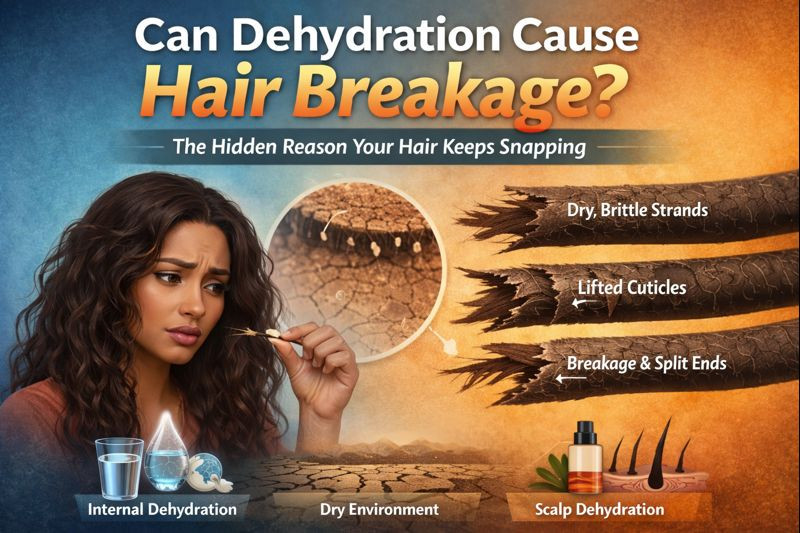
Hair breakage is one of the most frustrating problems to deal with. You moisturize, deep condition, trim regularly, and still—your hair keeps snapping, fraying, and thinning at the ends. If this sounds familiar, there’s a strong chance the real issue isn’t protein overload, heat damage, or genetics.
It may be dehydration.
Not just hair dehydration—but internal and scalp-level dehydration that slowly weakens your hair structure from the inside out. This article breaks down exactly how dehydration causes hair breakage, how to spot it early, and how to reverse it before length retention becomes impossible.
What Dehydration Really Means for Hair
Most people confuse dry hair with dehydrated hair, but they’re not the same.
-
Dry hair = lack of oils (lipids)
-
Dehydrated hair = lack of water inside the hair shaft
Hair can be oily, moisturized, and still severely dehydrated.
Your hair shaft is made of keratin layers that rely on water to stay flexible. When water levels drop, hair loses elasticity. Once elasticity is gone, breakage becomes inevitable.
Think of hydrated hair like a rubber band—it stretches and returns. Dehydrated hair behaves like a dry twig. It snaps.
How Dehydration Leads to Hair Breakage (Step by Step)
Dehydration doesn’t cause instant breakage. It creates a chain reaction that weakens hair over time.
1. Reduced Hair Elasticity
Water is what allows hair to stretch without breaking. When dehydration sets in:
-
Hair becomes stiff
-
Strands lose flexibility
-
Normal manipulation causes snapping
This is why hair breaks during detangling, styling, or even washing.
2. Cuticle Lifting and Weakening
Dehydrated hair has raised cuticles. Raised cuticles:
-
Increase friction between strands
-
Allow moisture to escape faster
-
Make hair vulnerable to mechanical damage
Once the cuticle stays lifted too long, the cortex underneath starts to fracture.
3. Increased Protein Sensitivity
When hair lacks water, protein products make things worse—not better.
Protein bonds need moisture to stay balanced. On dehydrated hair:
-
Protein hardens the strand
-
Hair feels brittle
-
Breakage increases dramatically
This is why “repair” routines sometimes backfire.
4. Scalp Dehydration Starves the Strand
Hair health starts at the scalp. A dehydrated scalp:
-
Produces weaker strands
-
Slows keratin formation
-
Increases shedding and breakage near the root
If breakage is happening close to your scalp, dehydration is often the root cause.
Signs Your Hair Breakage Is Caused by Dehydration
Not all breakage looks the same. Here’s how dehydration-related breakage shows up:
-
Hair snaps instead of shedding with a bulb
-
Ends feel rough even after conditioning
-
Hair breaks during gentle detangling
-
Wash-and-gos shrink excessively and feel stiff
-
Hair feels dry shortly after moisturizing
-
Hair breaks more in dry or cold weather
-
Protein treatments make hair worse, not better
If you’re seeing multiple signs, dehydration is almost certainly involved.
Can Drinking More Water Fix Hair Breakage?
This is where things get misunderstood.
Yes—hydration starts internally, but drinking water alone won’t fix breakage if the hair shaft and scalp are already compromised.
Here’s why:
-
Hair is non-living once it leaves the scalp
-
Water intake helps new growth, not damaged strands
-
External hydration is required to restore elasticity
The best results come from internal hydration + topical hydration working together.
Internal Dehydration and Hair Strength
When the body is dehydrated:
-
Blood flow to the scalp decreases
-
Nutrient delivery slows
-
Hair grows weaker and thinner
Chronic dehydration also increases stress hormones like cortisol, which can:
-
Shorten the growth phase
-
Increase breakage and shedding
-
Weaken the hair shaft at the root
Hair doesn’t thrive in survival mode.
Environmental Dehydration Is a Silent Breakage Trigger
Even if you drink enough water, your environment may still be dehydrating your hair.
Common culprits:
-
Cold winter air
-
Indoor heating
-
Air conditioning
-
Dry climates
-
Frequent sun exposure
These environments pull moisture out of the hair, not just the air.
This explains why breakage spikes seasonally—even with the same routine.
How Dehydration Affects Different Hair Types
Curly & Coily Hair
Curly hair has fewer cuticle layers protecting moisture. Dehydration causes:
-
Rapid shrinkage
-
Increased knotting
-
Breakage at bends and coils
Fine Hair
Fine strands need moisture to maintain strength. Dehydration leads to:
-
Mid-shaft breakage
-
Wispy ends
-
Difficulty retaining length
Color-Treated Hair
Chemical processing increases porosity, allowing water to escape faster—making dehydration-induced breakage more severe.
Why Moisturizing Isn’t Always Enough
Many people “moisturize” daily but stay dehydrated.
Why?
-
Using heavy oils without water
-
Sealing dryness instead of hydration
-
Applying products to already dry hair
-
Skipping scalp hydration entirely
True hydration requires water first, then sealants second.
The Right Way to Rehydrate Hair to Stop Breakage
Step 1: Start With Water-Based Hydration
Your hair should always be damp—not dry—when applying products. Look for:
-
Water as the first ingredient
-
Lightweight leave-ins
-
Aloe-based or humectant-rich formulas
Apply to damp hair, not dry strands.
Step 2: Hydrate the Scalp (Not Just the Hair)
A dehydrated scalp grows fragile hair. Use:
-
Water-based scalp sprays
-
Lightweight botanical hydrators
-
Gentle scalp massage to increase circulation
Avoid heavy oils alone—they don’t hydrate.
Step 3: Seal Without Suffocating
After hydration:
-
Use light oils or creams to slow water loss
-
Avoid thick waxes or petrolatum on dehydrated hair
-
Focus on ends, not roots
The goal is moisture retention, not coating.
Step 4: Reduce Moisture Loss Triggers
Protect hydration by:
-
Sleeping with satin or silk
-
Avoiding excessive heat
-
Limiting rough detangling
-
Using protective styles that don’t pull moisture out
How Long Does It Take to Reverse Dehydration Breakage?
You’ll usually notice changes in stages:
-
1–2 weeks: Softer feel, less snapping
-
3–4 weeks: Improved elasticity
-
6–8 weeks: Breakage slows significantly
-
3+ months: Stronger new growth
Consistency matters more than product count.
When Dehydration Looks Like Hair Damage
Dehydrated hair often gets misdiagnosed as:
-
Protein damage
-
Heat damage
-
Over-manipulation
-
Genetic thinning
The difference?
Damage doesn’t improve quickly. Dehydration responds fast once corrected.
If your hair improves rapidly with hydration, dehydration was the culprit.
Can Dehydration Cause Split Ends?
Yes—and faster than you think.
Dehydrated hair:
-
Frays instead of splitting cleanly
-
Develops micro-tears along the shaft
-
Breaks before splits are visible
This leads to false length retention—your hair grows, but snaps at the same rate.
The Connection Between Dehydration and Length Retention
Hair growth doesn’t equal length retention.
You can grow hair consistently and still stay the same length if:
-
Dehydration weakens the strand
-
Ends break faster than new growth
-
Elasticity never fully recovers
Hydration is the foundation of keeping what you grow.
Dehydration vs Over-Moisturizing: Knowing the Difference
Ironically, dehydration can coexist with over-moisturizing.
Signs of dehydration:
-
Stiffness
-
Breakage
-
Rough texture
Signs of over-moisturizing:
-
Mushy hair
-
Excessive shedding
-
Lack of strength
The fix isn’t more product—it’s balanced hydration with structure.
Final Verdict: Can Dehydration Cause Hair Breakage?
Yes—dehydration is one of the most overlooked causes of hair breakage.
When hair lacks water:
-
Elasticity disappears
-
Cuticles weaken
-
Strands snap under normal stress
The solution isn’t heavier products or more oils. It’s restoring hydration at every level—internal, scalp, and strand—then protecting it consistently.
If your hair keeps breaking despite “doing everything right,” dehydration may be the missing link.