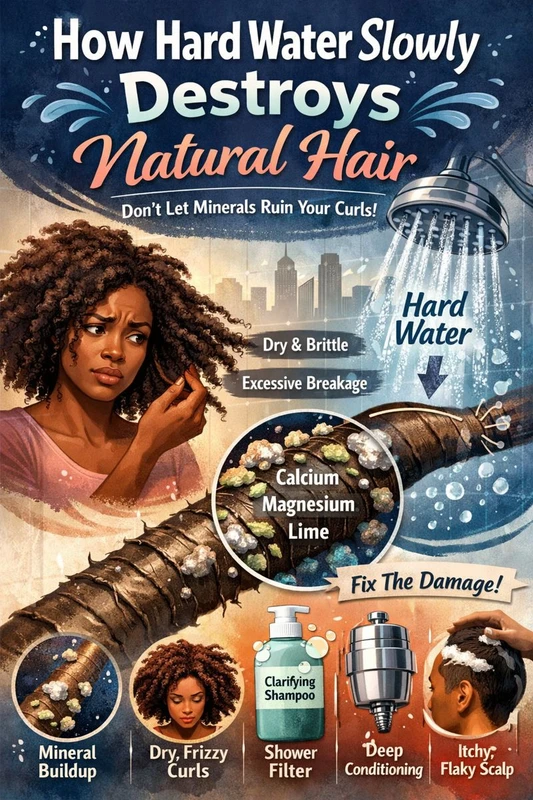
If your natural hair feels dry no matter what you do, breaks easily, won’t hold moisture, or suddenly stopped thriving after you moved—or even after switching cities—hard water might be the silent culprit.
Hard water damage doesn’t happen overnight. It’s sneaky. It builds slowly, washing after washing, until one day your hair just… isn’t the same anymore.
Let’s break down what hard water actually does to natural hair, why textured hair is especially vulnerable, and how to reverse and prevent the damage before it wrecks your length retention.
What Is Hard Water?
Hard water is water that contains high levels of dissolved minerals, mainly:
-
Calcium
-
Magnesium
-
Iron
-
Lime
These minerals come from groundwater moving through limestone and chalk deposits. While hard water isn’t dangerous to drink, it’s brutal on natural hair.
And here’s the kicker: over 85% of U.S. homes have hard water, especially in cities like Los Angeles, Phoenix, Houston, Atlanta, and parts of the Midwest.
So if your hair has been “acting funny” for months or years? This might be why.
Why Natural Hair Suffers More From Hard Water
Natural hair—especially curly, coily, and kinky textures—already struggles with moisture retention. Hard water makes that struggle worse because:
-
Curly strands have raised cuticles
-
Coils have more twists and turns, creating weak points
-
Natural hair relies heavily on water-based moisture
Hard water interferes with all of that.
Think of it like this:
Hard water blocks moisture, weakens strands, and creates buildup that shampoo alone can’t remove.
How Hard Water Slowly Destroys Natural Hair
1. Mineral Buildup Suffocates the Hair Shaft
Every time you wash with hard water, minerals coat your strands. Over time, this buildup:
-
Makes hair feel stiff, rough, or coated
-
Prevents moisture from entering the hair shaft
-
Causes products to sit on top instead of absorbing
This is why your favorite leave-in suddenly “stopped working.”
? The hair isn’t dry because it lacks products—it’s dry because nothing can penetrate anymore.
2. Hard Water Weakens the Hair Cuticle
Healthy hair cuticles lie flat. Hard water forces them open and keeps them there.
An open cuticle means:
-
Increased friction
-
More tangling
-
Faster moisture loss
-
Higher risk of breakage
This is why hard-water hair often:
-
Snaps during detangling
-
Breaks at the ends
-
Develops fairy knots
3. Hard Water Causes Chronic Dryness
Mineral deposits repel moisture.
Even if you deep condition weekly, hard water can:
-
Neutralize conditioners
-
Reduce slip
-
Cancel out humectants
So your hair feels dry right after wash day.
That’s not normal—and it’s not your imagination.
4. It Disrupts Your Scalp Environment
Hard water doesn’t just affect strands—it attacks the scalp too.
Over time it can:
-
Clog follicles with mineral residue
-
Cause itchiness and flakes
-
Trigger scalp inflammation
-
Slow down healthy hair growth
A stressed scalp = slower length retention.
5. Hard Water Fades Color & Alters Texture
If you color your natural hair, hard water speeds up fading.
But even uncolored hair can experience:
-
Dullness
-
Loss of curl definition
-
Increased frizz
-
Hair that feels wiry or brittle
Many naturals describe it as:
“My hair doesn’t feel like my hair anymore.”
That’s hard water damage talking.
Signs Hard Water Is Damaging Your Natural Hair
You may be dealing with hard water if:
-
Your hair feels dry immediately after washing
-
Products stop working after a few weeks
-
You experience excessive tangling
-
Your curls lose definition quickly
-
Hair breaks more during detangling
-
Your scalp feels itchy but not oily
-
You notice a filmy residue on strands
If several of these sound familiar, keep reading—because this is fixable.
Why Regular Shampoo Isn’t Enough
Most shampoos are designed to remove oil and dirt, not minerals.
Hard water minerals bind tightly to hair, which means:
-
Sulfate shampoos don’t fully remove them
-
Co-washing makes buildup worse
-
Moisturizing shampoos can actually trap minerals
This is why people with hard water often feel stuck in a cycle of:
Wash → Dry → Add product → Still dry → Breakage
How to Reverse Hard Water Damage on Natural Hair
Step 1: Clarify With Purpose (Not Aggression)
You need a true clarifying wash, not just “squeaky clean” hair.
Look for:
-
Chelating ingredients (EDTA, citric acid)
-
Gentle but effective cleansers
-
No heavy silicones afterward
Clarifying removes mineral buildup so moisture can re-enter.
? Frequency: Every 3–4 weeks if you have hard water.
Step 2: Rebalance Moisture Immediately
After clarifying, hair is vulnerable. This is where many people mess up.
You need:
-
A water-based leave-in
-
Lightweight oils that seal without coating
-
Scalp nourishment to calm irritation
This is where Hairobics Hair & Scalp Booster and Hairobics Leave-In Treatment shine—because they’re designed to penetrate, not sit on top.
Step 3: Treat the Scalp (Growth Depends on It)
Hard water can choke follicles.
A healthy scalp routine should:
-
Break down residue
-
Reduce inflammation
-
Increase blood flow
-
Restore balance
Massage oils and lightweight sprays work best here—especially when used consistently between wash days.
Step 4: Install a Shower Filter (This Is Non-Negotiable)
If you do nothing else, do this.
A good shower filter:
-
Removes calcium, chlorine, and iron
-
Prevents future mineral buildup
-
Improves curl definition instantly
-
Helps products work again
Many naturals notice a difference after the first wash.
Step 5: Adjust Your Wash Routine
With hard water, less is more.
Best practices:
-
Avoid daily washing
-
Don’t overuse protein
-
Deep condition with heat
-
Use lukewarm water, not hot
Consistency matters more than products.
Can Hard Water Cause Hair Loss?
Indirectly—yes.
Hard water can:
-
Block follicles
-
Cause scalp inflammation
-
Increase shedding due to breakage
The hair isn’t “falling out” from the root—but it’s breaking faster than it grows, which looks like hair loss over time.
Fix the environment, and growth resumes.
Why Some Naturals Thrive After Moving
Ever heard someone say:
“My hair grew so much after I moved!”
Often, the difference isn’t stress—it’s water quality.
Softer water =
-
Better moisture retention
-
Healthier scalp
-
Less buildup
-
Faster length retention
Same hair. Different water.
How Long Does It Take to Recover From Hard Water Damage?
With the right routine:
-
Moisture improves in 2–3 weeks
-
Breakage slows within a month
-
Curl pattern rebounds in 6–8 weeks
-
Length retention improves by 3 months
Hard water damage is cumulative—but so is healing.
Final Thoughts: Hard Water Isn’t Hopeless
Hard water doesn’t mean your natural hair is “bad,” “low porosity forever,” or “just difficult.”
It means your hair is fighting an invisible enemy.
Once you remove mineral buildup, protect your scalp, and stop future exposure, your hair can absolutely bounce back—softer, stronger, and more cooperative than before.
Your hair isn’t failing you.
Your water might be.