If your hair looks healthy but refuses to grow…
If your scalp feels tight, itchy, or coated…
If you moisturize constantly but still experience breakage, thinning, or stalled length…
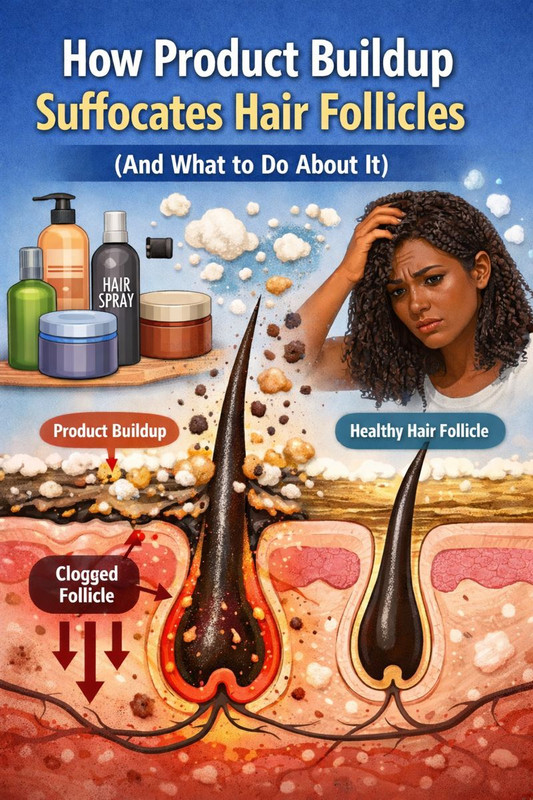
There’s a strong chance product buildup is suffocating your hair follicles — quietly sabotaging your growth from the scalp level.
Product buildup is one of the most overlooked causes of poor hair growth, especially in natural hair, protective styles, locs, and low-manipulation routines. Many people assume buildup only causes flakes or dullness, but the real damage happens beneath the surface, where follicles depend on oxygen, circulation, and a clean environment to function properly.
Let’s break down how buildup forms, why it chokes follicles, and how to reverse the damage without stripping your hair or scalp.
What Is Product Buildup, Really?
Product buildup is the accumulation of residues left behind by hair products that do not fully rinse away. Over time, these residues layer onto the scalp and hair shaft, forming a film that blocks moisture, airflow, and nutrient delivery.
Common contributors include:
-
Oils and butters
-
Leave-ins and creams
-
Pomades and edge controls
-
Gels and stylers
-
Silicones and waxes
-
Co-washes and sulfate-free shampoos
-
Hard water minerals (often overlooked)
Buildup doesn’t always look like flakes. Often, it feels like:
-
A coated or waxy scalp
-
Hair that repels water
-
Products “just sitting” on the hair
-
Tightness or pressure after washing
-
Hair that feels dry immediately after moisturizing
That’s where the real danger begins.
Why Hair Follicles Need Oxygen to Grow
Hair follicles are living structures embedded in the scalp. For healthy growth, they require:
-
Oxygen
-
Blood circulation
-
A balanced scalp microbiome
-
Clear follicle openings (pores)
When buildup accumulates, it acts like a plastic wrap over the scalp, preventing oxygen exchange and slowing blood flow to the follicle.
Think of it like trying to grow a plant in soil covered with glue — water may be added, but nothing penetrates.
How Product Buildup Suffocates Hair Follicles
1. Buildup Clogs Follicle Openings
Each strand of hair grows from a follicle opening on the scalp. When product residue hardens around these openings:
-
Sebum cannot flow properly
-
Sweat and toxins get trapped
-
Follicles become inflamed
This creates a hostile environment for growth, often leading to shedding, thinning, or weak regrowth.
2. It Restricts Blood Circulation
Heavy buildup increases scalp tension. That tight, immobile feeling many people describe is a sign that circulation is compromised.
Reduced circulation = reduced nutrient delivery
Reduced nutrients = slower growth cycles
Over time, follicles may enter a prolonged resting phase, making it appear as though hair has “stopped growing.”
3. It Disrupts the Scalp’s Microbiome
Your scalp hosts beneficial bacteria and fungi that keep inflammation under control. Buildup feeds harmful microbes while starving the good ones.
This imbalance can cause:
-
Chronic itching
-
Flaking that doesn’t respond to oiling
-
Tender or sore scalp areas
-
Hair thinning at the crown or edges
4. Buildup Blocks Moisture Absorption
One of the biggest misconceptions is that dry hair needs more product.
In reality, buildup blocks water, which is the only true source of moisture.
When hair is coated:
-
Water beads and rolls off
-
Conditioners cannot penetrate
-
Oils seal dryness instead of moisture
This leads to brittle strands, breakage, and split ends — even when you’re “doing everything right.”
Why Natural Hair Is Especially Vulnerable
Natural, textured hair routines often rely heavily on:
-
Layering products (LOC/LCO methods)
-
Thick butters and oils
-
Infrequent shampooing
-
Protective styles worn for weeks
While these methods aim to protect hair, they can unintentionally accelerate buildup, especially when clarifying is skipped.
The tighter the curl pattern, the harder it is for buildup to naturally shed — meaning it accumulates faster and lasts longer.
Signs Product Buildup Is Suffocating Your Follicles
If you’re experiencing multiple signs below, buildup is likely interfering with growth:
-
Hair grows everywhere except certain areas (crown, edges, nape)
-
Scalp feels tight or itchy after washing
-
Hair takes forever to dry
-
Flakes appear even with frequent oiling
-
Products stop “working” after a few weeks
-
Hair breaks easily during detangling
-
Scalp smells musty or sour between washes
Why Washing Isn’t Always Enough
Many modern shampoos are designed to be gentle — which is great for strands, but not always effective for removing stubborn residue.
Co-washes, sulfate-free shampoos, and creamy cleansers often clean the hair but leave buildup behind on the scalp.
This creates a cycle where people wash more often, add more product, and worsen the issue.
The Difference Between Cleansing and Clarifying
Cleansing shampoos:
-
Remove surface dirt and sweat
-
Gentle for frequent use
-
Often leave residue behind
Clarifying shampoos:
-
Break down oils, waxes, and mineral deposits
-
Reset the scalp environment
-
Necessary for follicle health
Clarifying is not about stripping hair — it’s about restoring scalp function so growth can resume.
How Often Should You Clarify?
This depends on your routine:
-
Heavy stylers or oils: every 2–4 weeks
-
Protective styles: before installation and after removal
-
Low product routine: every 4–6 weeks
-
Hard water exposure: monthly minimum
Ignoring clarifying for months at a time is one of the fastest ways to stall growth.
How to Safely Remove Buildup Without Drying Hair
Step 1: Start With Water, Not Oil
Apply clarifying shampoo to wet hair and scalp only. Oiling beforehand traps buildup deeper into follicles.
Step 2: Focus on the Scalp
Use fingertips or a soft scalp brush. Avoid nails — inflammation worsens follicle stress.
Step 3: Rinse Longer Than You Think
Many residues feel gone but aren’t. Rinse until hair feels light and responsive to water.
Step 4: Follow With a Moisture-Restoring Conditioner
Clarifying opens the cuticle. Rebalance immediately with hydration, not heavy butter.
Why Scalp Treatments Matter After Buildup Removal
Once follicles are unclogged, they are highly receptive to stimulation.
This is the ideal time to:
-
Massage the scalp
-
Apply lightweight botanical treatments
-
Restore circulation
-
Support growth cycles
This is where targeted scalp care — not heavy oils — makes the biggest difference.
Can Buildup Cause Permanent Damage?
If left unchecked for years, chronic follicle suffocation can lead to:
-
Miniaturized follicles
-
Persistent thinning
-
Delayed regrowth
The good news? Most buildup-related hair loss is reversible once the scalp environment is corrected.
Why “More Product” Is Rarely the Answer
If your hair isn’t responding, it’s not begging for more — it’s asking for less.
Healthy hair growth comes from:
-
Clean follicles
-
Balanced moisture
-
Consistent circulation
Not from piling on products hoping one finally works.
A Scalp-First Growth Mindset
Length retention starts at the ends.
But growth begins at the follicle.
If follicles are suffocating, nothing applied on top of the hair can override that.
The moment you prioritize scalp clarity over product layering is often the moment growth resumes.
Final Thoughts: Let Your Follicles Breathe
Product buildup doesn’t happen overnight — and neither does recovery. But once the scalp is cleared and circulation restored, many people notice:
-
Reduced shedding
-
Faster growth
-
Improved moisture retention
-
Healthier regrowth in problem areas
Hair doesn’t need to be forced to grow.
It just needs the right environment.
Clean. Oxygenated. Balanced.
That’s when follicles do what they were designed to do.