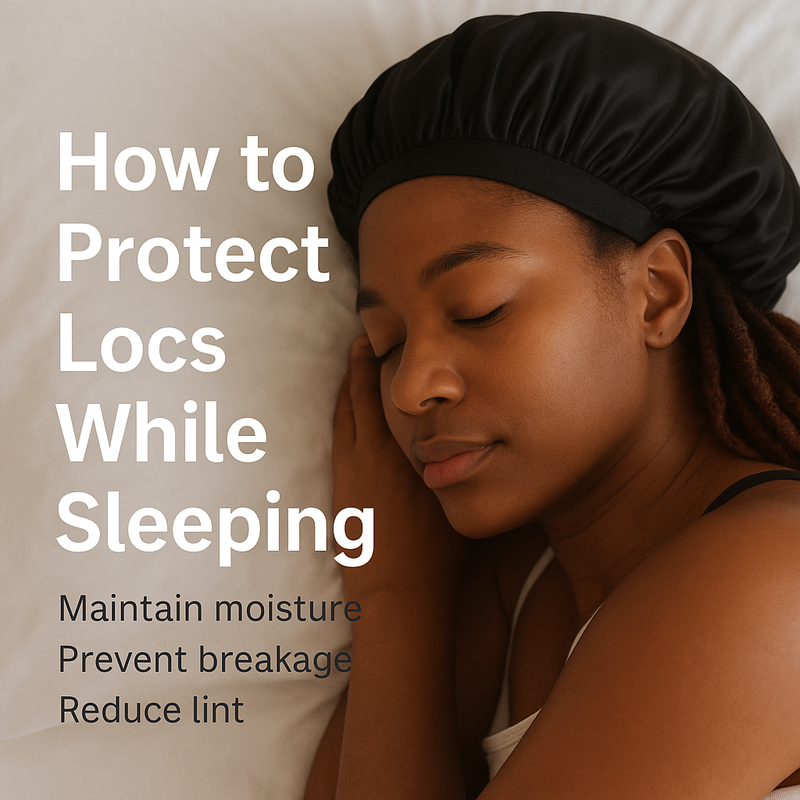
If you wear locs, what you do at night matters just as much as what you do during the day. Sleeping without proper protection is one of the fastest ways to dry out locs, cause breakage, increase lint buildup, and slow length retention.
Many people focus heavily on products and styles — but forget that 8 hours of nightly friction and moisture loss can undo all that work.
The good news? Protecting your locs while sleeping is simple, affordable, and incredibly effective when done correctly.
In this guide, you’ll learn:
-
Why nighttime protection is critical for loc health
-
How sleeping habits affect moisture and growth
-
The best ways to protect locs at night
-
What to avoid when sleeping with locs
-
A simple nightly routine for starter, teen, and mature locs
Why Protecting Locs While Sleeping Is So Important
Locs are more vulnerable at night because:
-
Hair rubs against pillowcases for hours
-
Moisture evaporates while you sleep
-
Friction weakens strands over time
-
Lint transfers easily to locs
Unlike loose hair, locs can trap dryness and debris inside the strand structure, making nighttime damage harder to reverse.
Without protection, you may notice:
-
Dry, brittle locs
-
Increased frizz
-
Lint buildup
-
Breakage near the roots or ends
-
Dull appearance
-
Thinning over time
Night protection is not optional — it’s essential.
How Sleeping Unprotected Damages Locs
Let’s break down exactly what happens when locs aren’t protected overnight.
1. Cotton Pillowcases Strip Moisture
Cotton absorbs moisture — including the moisture from your hair.
When locs rub against cotton:
-
Natural oils are absorbed
-
Water evaporates faster
-
Locs feel dry by morning
Over time, this leads to chronic dryness and brittleness.
2. Friction Causes Breakage and Frizz
Repeated rubbing weakens the hair cuticle, even in locs.
Friction leads to:
-
Thinning locs
-
Frayed ends
-
Excessive fuzz
-
Weak spots
This damage happens gradually — which is why many people don’t notice it until it’s significant.
3. Lint Transfers Easily to Locs
Lint from pillows, blankets, and clothing:
-
Gets trapped inside locs
-
Is difficult to remove
-
Dulls the appearance of locs
Nighttime protection dramatically reduces lint buildup.
4. Locs Lose Shape and Structure
Without protection:
-
Locs bend awkwardly
-
Roots swell
-
Retwists unravel faster
This can make locs look less maintained over time.
The Best Ways to Protect Locs While Sleeping
Now let’s cover the most effective methods to protect your locs at night.
1. Sleep With a Satin or Silk Bonnet
A satin or silk bonnet is one of the easiest and most effective ways to protect locs.
Benefits:
-
Reduces friction
-
Helps retain moisture
-
Prevents lint buildup
-
Keeps locs neat
Choose a bonnet that:
-
Fits comfortably (not tight)
-
Fully covers your locs
-
Has a smooth interior
For long locs, opt for a long bonnet or loc sock.
2. Use a Satin or Silk Pillowcase (Backup Protection)
If bonnets slip off while you sleep, a satin or silk pillowcase provides extra protection.
Benefits:
-
Reduces moisture loss
-
Minimizes friction
-
Helps protect edges and ends
Using both a bonnet and satin pillowcase gives maximum protection.
3. Moisturize Locs Lightly Before Bed
Dry hair overnight equals dry hair in the morning.
Before sleeping:
-
Lightly mist locs with a water-based spray
-
Focus on length and ends
-
Avoid soaking the hair
A lightweight hydrator like Hairobics Raaw Roots Moisturizing Spray is ideal because it adds moisture without buildup — perfect for nightly use.
4. Seal Moisture (Only If Needed)
If your locs are prone to dryness:
-
Apply a few drops of lightweight oil after misting
-
Focus on ends and mid-lengths
Avoid heavy oils or butters at night — they can cause buildup and attract lint.
5. Cover Your Locs Completely
Make sure:
-
All locs are inside the bonnet or wrap
-
Ends are tucked in
-
Nothing is hanging out
Exposed ends dry out faster and break more easily.
6. Choose the Right Night Wrap for Your Loc Length
Different loc stages and lengths require different protection.
Starter Locs:
-
Satin bonnet
-
Lightweight scarf
-
Gentle wrap to protect roots
Medium-Length Locs:
-
Regular satin bonnet
-
Satin scarf tied loosely
Long Locs:
-
Extra-long bonnet
-
Loc sock
-
Satin scarf + bonnet combo
Nighttime Protection Based on Loc Stage
Your loc journey stage matters when choosing a nighttime routine.
Protecting Starter Locs While Sleeping
Starter locs are delicate and prone to unraveling.
Tips:
-
Avoid tight wraps
-
Use soft satin
-
Don’t over-moisturize
-
Keep styles loose
Gentle protection helps locs mature properly.
Protecting Teen Locs While Sleeping
Teen locs are forming internally and can dry out easily.
Tips:
-
Moisturize lightly before bed
-
Protect roots and ends
-
Avoid friction at all costs
This stage benefits the most from consistency.
Protecting Mature Locs While Sleeping
Mature locs hold moisture better but still need protection.
Tips:
-
Focus on ends
-
Prevent lint buildup
-
Keep locs contained
Long-term protection preserves length and thickness.
Common Nighttime Mistakes That Damage Locs
Avoid these habits if you want healthy locs.
❌ Sleeping with uncovered locs
❌ Using cotton bonnets or scarves
❌ Overloading hair with heavy oils
❌ Sleeping with wet locs
❌ Letting locs rub against rough fabrics
❌ Ignoring ends and edges
Small mistakes repeated nightly lead to big damage.
Should You Sleep With Locs Tied Up or Loose?
It depends on your loc length and comfort.
Loose:
-
Better for short locs
-
Less tension
-
Reduced stress at roots
Tied or gathered:
-
Better for long locs
-
Prevents pulling
-
Keeps locs contained
Always prioritize comfort — tight styles at night can cause thinning.
The Role of Scalp Care at Night
Healthy locs start at the scalp.
At night:
-
Avoid heavy scalp oils
-
Massage gently if dry or itchy
-
Keep scalp clean
A lightweight oil like Hairobics Scalp Rejuvenator Oil can help soothe dryness without clogging follicles.
Weekly Nighttime Reset for Loc Health
Once a week:
-
Inspect locs for dryness
-
Lightly clarify if needed
-
Deep hydrate afterward
-
Trim lint-prone habits
This keeps your nighttime routine effective.
How Long Does It Take to See Results?
With proper nighttime protection:
-
Moisture improves within days
-
Frizz decreases within 1–2 weeks
-
Breakage reduces within a month
-
Shine and softness improve steadily
Consistency is key.
Night Protection and Hair Growth: The Connection
While hair growth happens at the scalp, length retention happens at the ends.
Protecting locs at night:
-
Prevents breakage
-
Preserves length
-
Maintains thickness
-
Supports long-term growth goals
Night protection doesn’t make hair grow faster — it helps you keep what you grow.
Simple Nighttime Routine for Locs (Checklist)
Every night:
-
Lightly mist locs
-
Seal ends if needed
-
Cover with satin or silk
-
Sleep comfortably
That’s it.
Final Thoughts: Nighttime Protection Is Non-Negotiable for Locs
If you want:
-
Softer locs
-
Less breakage
-
Better moisture retention
-
Cleaner, neater locs
-
Healthier long-term growth
Then protecting your locs while sleeping must be part of your routine.
Products help — but habits matter more.
With consistent nighttime care, your locs can thrive at every stage of your journey.