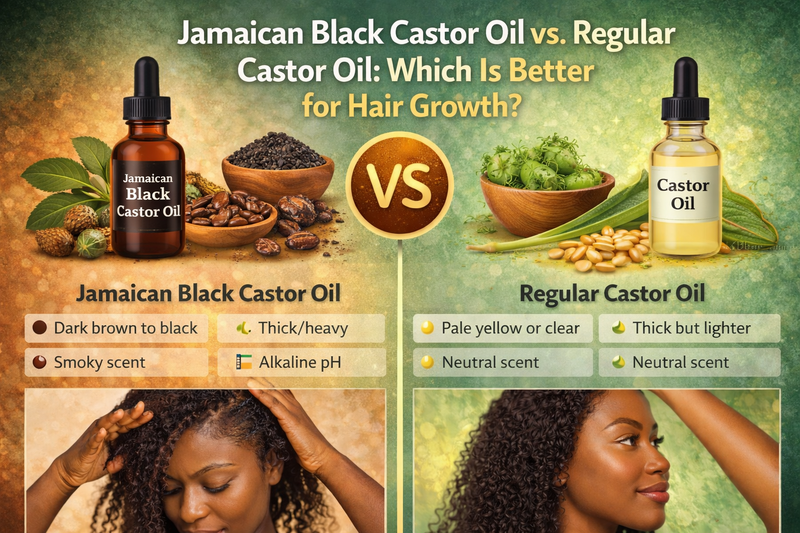
Introduction: Not All Castor Oils Are Created Equal
Castor oil has been a staple in hair care for generations, praised for its ability to promote thicker hair, healthier scalps, and stronger strands. But if you’ve ever shopped for castor oil, you’ve probably noticed two main options:
-
Jamaican Black Castor Oil (JBCO)
-
Regular Castor Oil
Both come from castor beans. Both claim hair growth benefits. Yet they look, feel, and perform very differently.
So which one is actually better for hair growth, scalp health, and length retention?
In this in-depth guide, we’ll break down:
-
How Jamaican Black Castor Oil and regular castor oil are made
-
The key differences between them
-
Which hair types benefit most from each
-
How each oil affects scalp health and hair growth
-
How to choose the right one for your routine
Let’s settle the debate once and for all.
What Is Castor Oil?
Castor oil is a thick, nutrient-rich oil extracted from the seeds of the castor plant (Ricinus communis). It’s packed with fatty acids, particularly ricinoleic acid, which gives castor oil its powerful benefits.
Key benefits of castor oil include:
-
Supporting scalp circulation
-
Helping retain moisture
-
Strengthening hair strands
-
Reducing breakage
-
Improving shine and thickness
While both Jamaican Black Castor Oil and regular castor oil come from the same plant, how they’re processed makes all the difference.
What Is Regular Castor Oil?
Regular castor oil is typically:
-
Cold-pressed or expeller-pressed
-
Pale yellow to clear in color
-
Mild or nearly odorless
How Regular Castor Oil Is Made
The castor beans are pressed directly to extract the oil, without roasting or burning the beans first. This preserves a clean, lightweight oil but removes some of the minerals found in the bean’s ash.
Benefits of Regular Castor Oil for Hair
-
Helps seal moisture into strands
-
Adds shine and softness
-
Strengthens weak or brittle hair
-
Works well for lashes, brows, and edges
Regular castor oil is often used in cosmetics and skincare because of its lighter texture and neutral scent.
What Is Jamaican Black Castor Oil (JBCO)?
Jamaican Black Castor Oil is a traditional oil with roots in Jamaican and African hair-care practices.
How Jamaican Black Castor Oil Is Made
The castor beans are:
-
Roasted
-
Crushed
-
Boiled
-
The oil is skimmed from the mixture
The roasting process creates ash, which mixes into the oil — giving JBCO its:
-
Dark brown or black color
-
Smoky, earthy scent
-
Alkaline pH
This process dramatically changes how the oil interacts with the scalp and hair.
Jamaican Black Castor Oil vs Regular Castor Oil: Key Differences
1. Color and Texture
| Feature | Jamaican Black Castor Oil | Regular Castor Oil |
|---|---|---|
| Color | Dark brown/black | Pale yellow/clear |
| Texture | Thick, heavy | Thick but slightly lighter |
| Scent | Smoky, earthy | Neutral or mild |
JBCO is heavier and more intense, while regular castor oil feels cleaner and lighter.
2. pH Level and Scalp Impact
One of the biggest differences is pH.
-
Jamaican Black Castor Oil has a more alkaline pH due to the ash content
-
Regular castor oil is closer to the hair’s natural pH
Why This Matters:
-
Alkaline oils can help open the hair cuticle, allowing moisture to enter
-
This makes JBCO especially beneficial for thick, coarse, or low-porosity hair
However, too much alkalinity can irritate sensitive scalps if overused.
3. Hair Growth and Scalp Circulation
Both oils support hair growth — but in slightly different ways.
Jamaican Black Castor Oil:
-
Stimulates blood flow to the scalp
-
Helps unclog hair follicles
-
Supports thicker, stronger regrowth
-
Ideal for thinning areas and edges
Regular Castor Oil:
-
Nourishes the scalp without heaviness
-
Supports consistent, healthy growth
-
Better for sensitive or inflamed scalps
If you’re dealing with slow growth or thinning, JBCO often delivers more dramatic results.
4. Moisture Retention and Breakage
Castor oil does not moisturize on its own — it seals moisture in.
-
JBCO excels at sealing moisture in very dry hair
-
Regular castor oil works well for normal to moderately dry hair
For extremely dry, coily, or chemically treated hair, JBCO is often the better choice.
5. Hair Type Compatibility
Jamaican Black Castor Oil Is Best For:
-
Natural hair (especially type 4)
-
Thick, coarse textures
-
Low-porosity hair
-
Locs, braids, and protective styles
-
Edges and thinning areas
-
Very dry scalps
Regular Castor Oil Is Best For:
-
Fine or medium hair
-
Wavy or curly hair
-
Sensitive scalps
-
Oily scalps (used sparingly)
-
Lashes and eyebrows
-
Light sealing needs
Choosing the wrong oil for your hair type can lead to buildup or irritation.
Jamaican Black Castor Oil for Hair Growth: Does It Really Work?
JBCO has earned its reputation because it:
-
Improves scalp circulation
-
Strengthens hair at the root
-
Supports longer growth cycles
-
Reduces breakage
Many people notice:
-
Fuller edges
-
Faster regrowth after shedding
-
Thicker hair over time
This is why JBCO is often used in growth serums and scalp treatments, including formulations like Hairobics Jamaican Black Castor Oil blends, which balance JBCO with lighter oils to prevent heaviness.
Regular Castor Oil for Hair Growth: A Gentle Alternative
Regular castor oil still offers impressive benefits:
-
Strengthens strands
-
Improves shine
-
Reduces dryness
-
Supports long-term retention
It’s ideal for those who want castor oil benefits without the weight or intensity of JBCO.
Which Oil Is Better for Scalp Health?
Scalp health is critical for hair growth.
Jamaican Black Castor Oil:
-
Helps with dry scalp
-
Improves circulation
-
Can reduce flaking caused by dryness
However, it may be too heavy for:
-
Very oily scalps
-
Inflamed or sensitive skin
-
People prone to buildup
Regular Castor Oil:
-
Gentler on the scalp
-
Less likely to clog pores
-
Easier to wash out
For sensitive scalps, regular castor oil often wins.
How to Use Jamaican Black Castor Oil Correctly
To avoid buildup or irritation:
-
Apply sparingly
-
Focus on the scalp and thinning areas
-
Massage gently to stimulate blood flow
-
Use 2–3 times per week
Blended formulations tend to work better than raw oil alone.
How to Use Regular Castor Oil Correctly
-
Use as a sealant after moisturizing
-
Apply to ends to prevent breakage
-
Mix with lighter oils for daily use
-
Ideal for lashes, brows, and edges
Jamaican Black Castor Oil vs Regular Castor Oil for Edges
Edges are delicate and need extra care.
-
JBCO promotes regrowth in thinning edges
-
Regular castor oil helps maintain healthy edges once regrowth starts
Many edge serums combine both for balanced results.
Common Mistakes People Make With Castor Oil
-
Using too much
-
Applying to dry hair without moisture
-
Not washing out buildup
-
Using the wrong type for their hair
Castor oil works best as part of a balanced routine, not as a miracle overnight fix.
Which One Should You Choose?
Choose Jamaican Black Castor Oil If:
-
Your hair is very dry
-
Your growth feels slow
-
Your edges are thinning
-
You wear protective styles often
-
You have thick or coily hair
Choose Regular Castor Oil If:
-
Your hair is fine or medium
-
Your scalp is sensitive
-
You want lighter sealing
-
You’re focusing on lashes or brows
Some of the best results come from using both strategically.
Final Thoughts: It’s Not About Which Is Better — It’s About What Your Hair Needs
Jamaican Black Castor Oil and regular castor oil are both powerful — but they serve different purposes.
-
JBCO is intense, growth-focused, and deeply nourishing
-
Regular castor oil is gentle, versatile, and maintenance-friendly
When used correctly, either can support stronger, longer, healthier hair.
At Hairobics All Natural, castor oil is treated as a tool, not a cure-all — blended intentionally to support scalp health, moisture balance, and long-term growth.