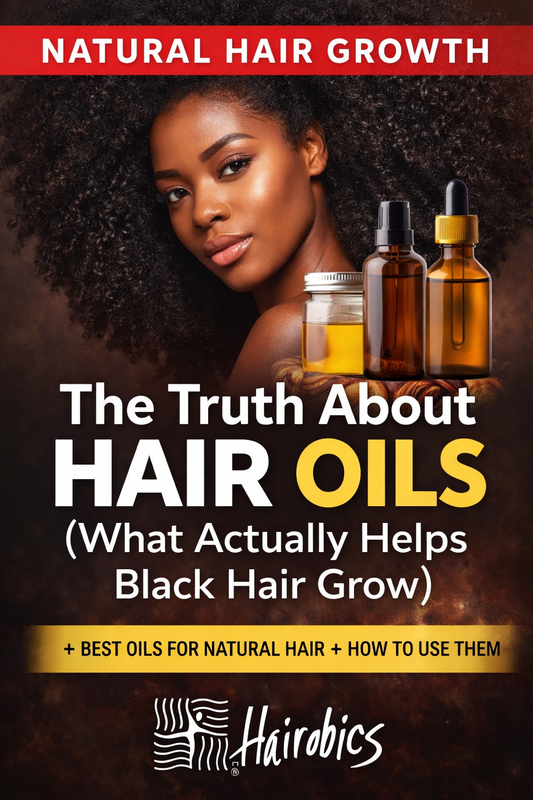
Introduction: The Hair Oil Debate
Hair oils have been used for centuries across cultures as a way to nourish, protect, and grow hair. In the Black hair care community especially, oils are often seen as essential tools for maintaining healthy natural hair. Walk into any beauty supply store and you’ll find shelves filled with oils promising rapid hair growth, thicker edges, stronger strands, and longer hair.
But here’s the truth many people don’t talk about:
Hair oils alone do not make hair grow faster.
This statement surprises many people, especially because oils are constantly marketed as miracle growth solutions. The reality is more nuanced. Oils can absolutely support hair growth, but they work differently than most people expect.
To truly understand the role oils play in hair growth, we need to explore:
-
The biology of Black hair growth
-
What oils actually do for the scalp and hair shaft
-
Which oils work best for natural hair
-
Which oils are overrated
-
The right way to use oils for maximum results
In this complete guide, we’ll uncover the science behind hair oils and how they actually help Black hair grow longer, stronger, and healthier.
Understanding Black Hair Growth
Before discussing oils, it’s important to understand how hair growth actually works.
Hair growth occurs at the hair follicle, which sits beneath the scalp. Each follicle produces hair through a cycle consisting of three main phases.
The Hair Growth Cycle
1. Anagen Phase (Growth Phase)
This is the active growth stage.
Hair grows about 0.5 inches per month, which equals roughly 6 inches per year.
For Black hair, the anagen phase typically lasts 2–5 years.
2. Catagen Phase (Transition Phase)
The follicle begins shrinking and growth stops.
This stage lasts 2–3 weeks.
3. Telogen Phase (Resting Phase)
Hair rests before eventually shedding.
About 10–15% of hair is in this stage at any given time.
Why Black Hair Needs Extra Moisture
Black hair has a unique structure.
Natural hair typically grows in tight coils or curls, which makes it harder for natural scalp oils to travel down the hair shaft.
Because of this:
-
Ends dry out faster
-
Breakage occurs more easily
-
Moisture loss happens quickly
This is where hair oils become important.
The Biggest Myth About Hair Oils
The most common misconception is:
Hair oils directly make hair grow faster.
In reality:
Hair growth happens inside the follicle, beneath the scalp.
Oils applied to the hair cannot change the speed of cell division in the follicle.
Instead, oils help by:
-
Protecting hair from breakage
-
Sealing in moisture
-
Improving scalp health
-
Reducing inflammation
-
Strengthening hair strands
When hair breaks less, it appears to grow faster because you retain more length.
This is why oils are often credited with hair growth.
The Real Benefits of Hair Oils for Black Hair
When used correctly, oils can transform natural hair health.
1. Moisture Retention
Oils help seal moisture into the hair shaft.
This is especially important for low porosity hair, which struggles to absorb moisture.
Applying oils after a moisturizer prevents water from evaporating too quickly.
2. Reduced Breakage
Dry hair breaks easily.
Oils improve elasticity, allowing hair to bend without snapping.
Less breakage = more length retention.
3. Scalp Health
Healthy follicles require a healthy scalp.
Some oils contain:
-
Anti-inflammatory compounds
-
Antioxidants
-
Antibacterial properties
These help create a better environment for hair growth.
4. Protection Against Damage
Hair oils can reduce damage caused by:
-
Heat styling
-
UV exposure
-
Friction from clothing
-
Environmental pollutants
The Best Oils for Black Hair Growth
Not all oils are created equal.
Some oils penetrate the hair shaft while others simply coat the hair.
Let’s explore the most effective ones.
Jamaican Black Castor Oil
Jamaican Black Castor Oil (JBCO) is one of the most popular oils in the natural hair community.
Why It Works
JBCO contains:
-
Ricinoleic acid
-
Omega-9 fatty acids
-
Vitamin E
These nutrients help:
-
Strengthen hair
-
Improve scalp circulation
-
Reduce scalp dryness
Best Uses
-
Edge treatments
-
Protective style scalp oil
-
Deep conditioning treatments
Coconut Oil
Coconut oil is one of the few oils that can penetrate the hair shaft.
Benefits
-
Reduces protein loss
-
Strengthens hair strands
-
Prevents breakage
Best Uses
-
Pre-poo treatments
-
Deep conditioning
-
Protein protection
Argan Oil
Argan oil is known as “liquid gold.”
It contains:
-
Vitamin E
-
Antioxidants
-
Fatty acids
Benefits
-
Adds shine
-
Smooths frizz
-
Protects hair from heat
Jojoba Oil
Jojoba oil is unique because its structure closely resembles natural scalp sebum.
Benefits
-
Balances scalp oils
-
Moisturizes without clogging follicles
-
Helps reduce dandruff
Grapeseed Oil
Grapeseed oil is lightweight and perfect for people who dislike heavy oils.
Benefits
-
Adds shine
-
Strengthens hair
-
Lightweight moisture sealant
Oils That Are Overrated
Some oils are heavily marketed but less effective for natural hair growth.
Examples include:
-
Mineral oil
-
Petroleum-based oils
-
Synthetic fragrance oils
These often coat the hair without providing real nourishment.
How to Use Hair Oils Correctly
Many people use oils the wrong way.
Here are the most effective techniques.
The LOC Method
LOC stands for:
Liquid → Oil → Cream
Steps:
-
Apply water or leave-in conditioner
-
Apply hair oil to seal moisture
-
Apply cream to lock everything in
This method is extremely effective for natural hair.
Pre-Poo Treatments
Applying oil before shampooing protects hair from harsh detergents.
Steps:
-
Apply coconut or olive oil
-
Leave for 20–30 minutes
-
Shampoo normally
Scalp Massages
Massaging oils into the scalp can increase blood flow.
Recommended oils:
-
Castor oil
-
Peppermint oil
-
Rosemary oil
Massage for 5–10 minutes.
The Oils That Actually Stimulate Hair Growth
Some oils may indirectly support follicle activity.
Peppermint Oil
Studies show peppermint oil may stimulate hair growth by increasing blood flow.
Rosemary Oil
Some research suggests rosemary oil may perform similarly to minoxidil in certain cases.
Tea Tree Oil
Tea tree oil improves scalp health by reducing fungus and bacteria.
How Often Should You Oil Black Hair?
Frequency depends on hair type.
Coarse / Type 4 Hair
Oil 2–3 times per week.
Medium Texture Hair
Oil 1–2 times per week.
Fine Hair
Oil once weekly.
Signs You’re Using Too Much Oil
Too much oil can actually harm hair.
Signs include:
-
Greasy hair
-
Product buildup
-
Itchy scalp
-
Dull strands
Balance is key.
The Best Hair Oil Routine for Natural Hair
A strong routine might look like:
Day 1
Wash + deep condition
Day 2
LOC method styling
Day 3–4
Light scalp oil massage
Day 6
Protective style refresh
The Biggest Reasons Hair Oils Fail
Many people say oils “don’t work.”
Usually it’s because of these mistakes.
Applying Oil to Dry Hair
Oil seals moisture but does not add moisture.
Using Too Much
Heavy buildup blocks hydration.
Ignoring the Scalp
Healthy follicles require scalp care.
The Best Oil Blends for Hair Growth
Combining oils often produces the best results.
Example blend:
-
Castor oil
-
Jojoba oil
-
Peppermint oil
-
Vitamin E oil
These blends nourish both hair and scalp.
Hair Oils vs Hair Serums
Hair oils are natural plant oils.
Hair serums often contain:
-
Silicone
-
Synthetic shine enhancers
Both have different purposes.
Protective Styles and Oils
Protective styles such as:
-
Braids
-
Locs
-
Twists
benefit from lightweight oiling.
Focus on the scalp and new growth.
Nutrition Matters More Than Oils
Hair growth begins internally.
Important nutrients include:
-
Protein
-
Iron
-
Biotin
-
Zinc
-
Vitamin D
Without proper nutrition, oils cannot compensate.
Stress and Hair Growth
Stress increases cortisol, which can disrupt the hair growth cycle.
Scalp massages with oils can help reduce stress and improve scalp circulation.
Building the Ultimate Hair Oil Routine
For optimal results:
-
Clean scalp regularly
-
Moisturize hair weekly
-
Seal moisture with oils
-
Protect hair from breakage
-
Maintain a healthy diet
Consistency produces the best results.
The Final Truth About Hair Oils
Hair oils are not miracle growth potions.
But they are powerful tools when used properly.
They help by:
-
Reducing breakage
-
Maintaining moisture
-
Protecting strands
-
Improving scalp health
When these factors improve, hair retains length and appears to grow faster.
For Black hair especially, oils remain one of the most valuable tools for maintaining long, healthy natural hair.