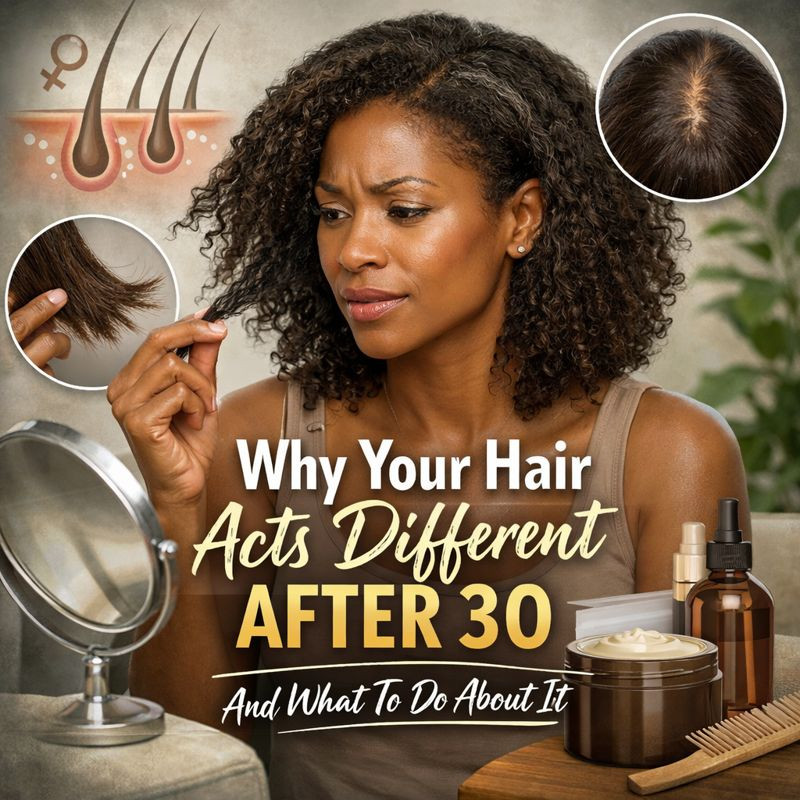
If you’ve crossed into your 30s and suddenly your hair feels drier, breaks faster, grows slower, or just refuses to act right, you’re not imagining things. Many people hit their 30s expecting skin changes—but hair changes often come first and hit harder.
Hair that once thrived on a simple wash-and-go may now feel brittle. Styles that used to last days now collapse in hours. Products you swore by suddenly stop working. Growth feels slower. Edges feel fragile. Moisture disappears overnight.
This isn’t “bad hair.”
It’s biological, hormonal, and structural change—and once you understand it, you can work with your hair again instead of fighting it.
This guide breaks down exactly why hair behaves differently after 30, what’s actually happening inside your body and hair strand, and how to adjust your routine so your hair can thrive again.
Hair After 30: What Actually Changes?
Your hair doesn’t suddenly rebel at 30 for no reason. Several slow, invisible shifts begin happening in your body during your late 20s and early 30s—and hair is often one of the first places they show up.
1. Hormonal Shifts Begin Earlier Than You Think
You don’t need menopause for hormones to affect your hair. Subtle hormonal changes start as early as your late 20s:
-
Estrogen levels begin fluctuating instead of staying consistent
-
Progesterone cycles shift
-
Cortisol (stress hormone) rises more easily and stays elevated longer
Estrogen supports hair growth, thickness, and moisture retention. When it fluctuates or slowly declines, hair can:
-
Feel drier
-
Shed more noticeably
-
Take longer to grow
-
Lose density around edges and crown
This is why many people say, “My hair just doesn’t grow like it used to.”
It does—but the growth cycle is slower and more sensitive.
2. Your Scalp Produces Less Oil
One of the biggest changes after 30 happens at the scalp level.
Sebum (your scalp’s natural oil) production decreases with age. This oil is what:
-
Coats hair strands
-
Prevents moisture loss
-
Keeps ends flexible
Less sebum means:
-
Hair feels drier even when moisturized
-
Ends split faster
-
Wash days feel harsher
-
Hair loses shine more quickly
This is why hair after 30 often feels dry no matter how much product you use—because moisture isn’t being sealed naturally anymore.
3. Hair Strand Structure Becomes More Fragile
As you age, your hair’s protein structure subtly changes.
-
Keratin bonds weaken
-
The cuticle (outer layer) becomes more prone to lifting
-
Hair loses elasticity faster
This leads to:
-
Breakage during detangling
-
Hair snapping instead of stretching
-
Ends thinning faster than roots
It’s not that your hair is “worse.”
It’s that it requires gentler handling than before.
4. Growth Cycles Slow Down
Hair grows in cycles: growth (anagen), rest (catagen), and shedding (telogen).
After 30:
-
Growth phases shorten slightly
-
Rest phases lengthen
-
Shed hairs may not be replaced as quickly
This makes hair appear:
-
Thinner
-
Slower growing
-
Less dense over time
This is especially noticeable if:
-
You wear protective styles often
-
You’ve experienced stress, illness, or weight changes
-
You’ve had children
Why Your Old Hair Routine Stops Working
One of the most frustrating parts of hair after 30 is realizing that what used to work suddenly doesn’t.
Here’s why.
Your Hair Needs Change—But Your Routine Didn’t
In your 20s, your hair could tolerate:
-
Frequent heat
-
Tight styles
-
Minimal moisture
-
Inconsistent routines
In your 30s, that same approach leads to:
-
Chronic dryness
-
Breakage
-
Thinning edges
-
Scalp irritation
Hair after 30 punishes inconsistency.
Products Feel Like They “Sit” on Your Hair
If leave-ins stop absorbing or oils feel heavy but ineffective, it’s often because:
-
Cuticles lift more easily
-
Hair porosity changes
-
Product buildup accumulates faster
This causes:
-
Sticky or coated hair
-
Dryness underneath product
-
Frizz despite layering products
The fix isn’t more product—it’s better absorption and scalp health.
Why Hair Feels Drier After 30 (Even When You Moisturize)
This is one of the most common complaints.
Moisture vs. Retention
Most people moisturize their hair—but don’t retain moisture.
After 30:
-
Natural oil production drops
-
Cuticles don’t seal as easily
-
Environmental exposure has more impact
So water leaves the strand faster.
That’s why:
-
Hair dries out overnight
-
Styles don’t last
-
Ends feel crunchy by day two
The solution is layered hydration:
-
Water or water-based leave-in
-
Lightweight oil or butter
-
Scalp nourishment (not just hair length)
Why Breakage Increases After 30
Breakage after 30 isn’t random—it’s cumulative.
Years of Wear and Tear Add Up
By your 30s, your hair has likely endured:
-
Years of tight styles
-
Heat exposure
-
Chemical services
-
Stress shedding
-
Nutrient fluctuations
Even if you’re natural now, your hair remembers.
Breakage often shows up as:
-
Thin ends
-
Short layers that won’t catch up
-
Fragile edges
-
Breakage at the crown
This is why length retention becomes harder than growth itself.
Stress Hits Hair Harder After 30
Your nervous system changes with age.
Cortisol rises more easily and takes longer to fall—especially if you’re juggling:
-
Career
-
Parenting
-
Finances
-
Sleep deprivation
High cortisol:
-
Pushes hair into shedding phase
-
Increases scalp inflammation
-
Disrupts growth cycles
This explains why stressful periods in your 30s often come with:
-
Sudden shedding
-
Scalp tenderness
-
Hair thinning in specific areas
Why Hair Texture Can Change After 30
Many people notice:
-
Looser curls
-
Tighter coils
-
Uneven texture
-
More frizz
This is normal.
Texture changes happen due to:
-
Hormones
-
Scalp changes
-
Hair follicle shape shifting slightly
-
Reduced oil lubrication
Hair isn’t becoming “damaged”—it’s evolving.
How to Care for Hair After 30 (The Right Way)
Here’s how to adjust your routine so your hair thrives instead of struggles.
1. Scalp Care Becomes Non-Negotiable
Healthy hair starts with a nourished scalp.
Focus on:
-
Gentle scalp massages
-
Consistent cleansing (not over-washing)
-
Lightweight scalp oils or serums
A healthier scalp:
-
Supports stronger growth
-
Reduces inflammation
-
Improves moisture retention
2. Moisture Needs to Be Intentional
Random moisturizing isn’t enough anymore.
Use:
-
Water-based leave-ins
-
Sealants that don’t suffocate strands
-
Nighttime protection (bonnets, silk pillowcases)
Hair after 30 thrives on consistency, not product overload.
3. Detangle Like Your Hair Is Fragile (Because It Is)
Switch to:
-
Detangling only on damp, conditioned hair
-
Wide-tooth combs or fingers
-
Sectioning every time
Aggressive detangling causes more breakage now than it did in your 20s.
4. Protective Styles Should Protect—Not Stress
Protective styles help—but only if they’re:
-
Lightweight
-
Not tight at the edges
-
Not left in too long
Styles that pull or add tension will thin hair faster after 30.
5. Trim for Health, Not Just Length
Holding onto thin ends slows progress.
Regular trims:
-
Prevent splits from traveling
-
Improve thickness appearance
-
Help hair retain moisture better
Healthy ends grow longer than damaged ones.
Nutrition Matters More Than Ever
Hair after 30 reflects internal health more clearly.
Pay attention to:
-
Protein intake
-
Iron levels
-
Omega-3 fats
-
Hydration
-
Sleep quality
Many people think they need more products—when what they really need is better internal support.
The Biggest Mindset Shift After 30
Here’s the truth most people don’t hear:
Hair after 30 isn’t worse.
It’s more honest.
It responds exactly to:
-
How you treat it
-
How you manage stress
-
How consistent your care is
Once you stop chasing your 20-year-old routine and start supporting your hair where it is now, things improve—often dramatically.
Final Thoughts: Your Hair Isn’t Failing—It’s Changing
If your hair acts different after 30, it’s not broken.
It’s adapting to a new phase of life.
With the right:
-
Moisture strategy
-
Scalp care
-
Stress management
-
Gentle handling
Your hair can be thicker, healthier, and more resilient than ever—just in a different way than before.
Hair after 30 doesn’t respond to shortcuts.
But it does reward intention, patience, and consistency.
And once you align your routine with your hair’s new needs, it stops fighting you—and starts thriving again.