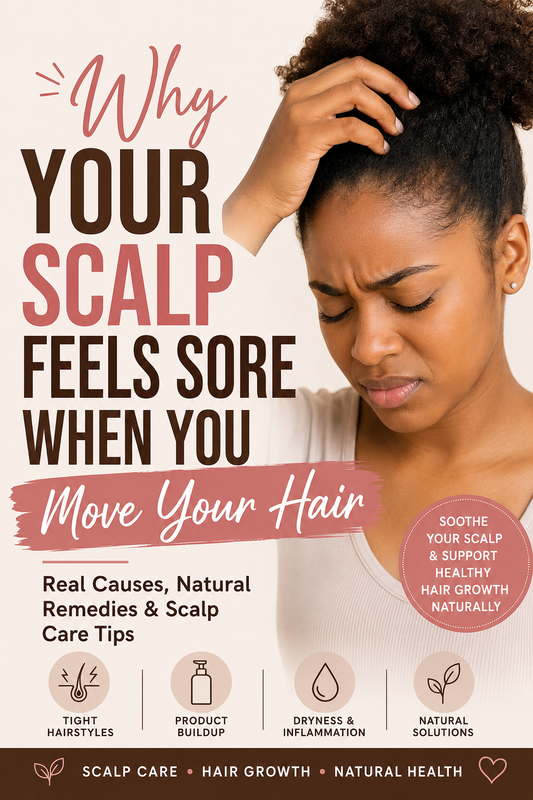
If your scalp hurts when you move your hair, put your hair in a ponytail, brush it, or even touch it lightly, you are not alone. Scalp soreness is a surprisingly common issue that affects people with natural hair, braids, wigs, locs, curls, relaxed hair, and protective styles. Sometimes the pain feels tender, tight, burning, itchy, inflamed, or even like tiny bruises on the scalp.
For many people, the soreness gets worse after wearing tight hairstyles, skipping wash day, using too much product, or dealing with scalp dryness and inflammation. Others notice their scalp hurts more during stress, hormonal changes, or periods of heavy shedding.
The good news is that most scalp soreness can be improved naturally once you understand what is actually causing it.
In this complete guide, you will learn:
- Why your scalp hurts when you move your hair
- The hidden causes of scalp tenderness
- Why protective styles sometimes create scalp pain
- How inflammation affects hair growth
- The connection between buildup, dryness, and soreness
- Natural ways to soothe an irritated scalp
- The best scalp care routine for healthy hair growth
- When scalp soreness may signal a bigger problem
If your scalp constantly feels tight, sensitive, or painful, this article will help you finally understand what your hair and scalp are trying to tell you.
What Does Scalp Soreness Feel Like?
Scalp soreness can feel different from person to person. Some people describe it as:
- Tenderness when touching the scalp
- Pain when moving hair side to side
- Burning sensations
- Tightness around the roots
- Itching combined with soreness
- A bruised feeling
- Tingling or inflammation
- Sharp pain around ponytails or braids
- Sensitivity during detangling
- Pain after taking down a hairstyle
For some people, the discomfort lasts only a few hours. For others, it becomes a chronic issue that returns repeatedly.
The soreness often happens because the scalp itself becomes irritated or inflamed.
Why Does Your Scalp Hurt When You Move Your Hair?
The scalp contains thousands of nerve endings and hair follicles. When the follicles become irritated, inflamed, dry, clogged, or stressed, even small hair movements can trigger discomfort.
Your hair follicles are connected to tiny muscles called arrector pili muscles. When the scalp is inflamed or sensitive, moving the hair can pull on these irritated follicles and nerves, causing pain.
Common triggers include:
- Tight hairstyles
- Product buildup
- Dry scalp
- Inflammation
- Excess oil
- Dirty scalp conditions
- Protective styles
- Stress
- Poor circulation
- Scalp infections
- Overwashing
- Harsh products
Understanding the root cause is the key to stopping the soreness permanently.
1. Tight Hairstyles Are One of the Biggest Causes
One of the most common reasons your scalp hurts is excessive tension from hairstyles.
This includes:
- Tight ponytails
- Braids
- Knotless braids
- Cornrows
- Sew-ins
- Tight buns
- Wigs
- Tight loc retwists
- Clip-in extensions
When hair is constantly pulled tightly, the follicles become inflamed and stressed.
This creates:
- Scalp tenderness
- Tiny bumps
- Burning sensations
- Hairline thinning
- Redness
- Tension headaches
Over time, repeated tension can even lead to traction alopecia, a form of hair loss caused by chronic pulling.
Signs Your Hairstyle Is Too Tight
- Pain immediately after styling
- Small white bumps near the roots
- Redness around follicles
- Difficulty sleeping because of scalp pain
- Pain when touching braids
- Hairline soreness
- Scalp feels “stretched”
If your scalp hurts for more than a few days after styling, your hairstyle is probably too tight.
2. Product Buildup Can Make the Scalp Inflamed
Heavy oils, gels, edge controls, dry shampoo, grease, and styling creams can build up on the scalp over time.
When buildup accumulates, it can clog follicles and irritate the scalp.
This buildup can:
- Trap bacteria
- Create itching
- Cause inflammation
- Make follicles sore
- Reduce scalp oxygen flow
- Increase dandruff
- Cause tenderness during washing
Many people continue adding oils to a dirty scalp without properly cleansing first, which can worsen soreness.
Signs of Product Buildup
- Waxy scalp feeling
- White flakes
- Itchy roots
- Oily scalp but dry hair
- Tender scalp
- Strange odor
- Hair feels heavy
A clean scalp is essential for healthy follicles.
3. Dry Scalp Can Trigger Pain and Tightness
A dry scalp does not only itch. It can also become extremely sensitive and sore.
When the scalp lacks moisture, the skin barrier weakens. This creates tiny cracks and irritation that can make hair movement painful.
Dry scalp is often caused by:
- Harsh shampoos
- Cold weather
- Overwashing
- Sulfates
- Lack of hydration
- Dehydration
- Excessive heat styling
People with curly and coily hair are especially prone to dry scalp because natural oils travel down the hair shaft more slowly.
Signs of Dry Scalp
- Tight feeling after washing
- Ashy scalp appearance
- Small dry flakes
- Itching
- Tenderness
- Hair feels brittle
Moisture balance is critical for scalp comfort.
4. Dirty Hair and Infrequent Washing
Many people avoid washing protective styles for long periods.
Unfortunately, sweat, oils, bacteria, dead skin, and buildup can accumulate quickly.
An unhealthy scalp environment may cause:
- Soreness
- Inflammation
- Itching
- Odor
- Follicle irritation
- Fungal overgrowth
Your scalp is skin. It needs regular cleansing.
How Often Should You Wash?
This depends on your hair type and style, but many people benefit from cleansing every:
- 7–14 days with protective styles
- 5–10 days for oily scalp conditions
- Weekly if using many products
Keeping the scalp clean helps reduce tenderness dramatically.
5. Scalp Inflammation and Follicle Stress
Inflammation is one of the hidden reasons scalp soreness becomes chronic.
Inflammation can weaken follicles and interfere with healthy hair growth.
Common inflammation triggers include:
- Stress
- Tight hairstyles
- Harsh chemicals
- Poor diet
- Lack of sleep
- Allergic reactions
- Scalp conditions
Inflammation increases scalp sensitivity and can make follicles painful to the touch.
6. Protective Styles Can Irritate the Scalp
Protective styles can help retain length, but they can also stress the scalp if done incorrectly.
Problems happen when:
- Braids are too tight
- Extensions are too heavy
- Styles stay in too long
- The scalp is neglected
- Tension is concentrated in one area
The scalp may become sore because the follicles are under continuous pressure.
How to Prevent Soreness With Braids
- Avoid excessive tension
- Use lightweight extensions
- Moisturize the scalp
- Cleanse regularly
- Avoid keeping styles too long
- Give the scalp breaks between styles
Healthy protective styling should never feel painful.
7. Ponytail Headaches and Scalp Pain
A tight ponytail can literally irritate the nerves surrounding hair follicles.
This creates the classic “ponytail headache.”
The scalp becomes sore because the follicles are pulled in one direction for long periods.
Common Symptoms
- Tender scalp
- Headaches
- Pain near temples
- Hairline sensitivity
- Burning sensation
Switching hairstyles regularly can reduce stress on follicles.
8. Seborrheic Dermatitis and Dandruff
Sometimes scalp soreness is linked to scalp conditions.
One of the most common is seborrheic dermatitis.
Symptoms include:
- Yellow flakes
- Greasy scalp
- Redness
- Itching
- Burning
- Tenderness
Inflammation from dandruff-related conditions can make moving the hair uncomfortable.
Keeping the scalp balanced and clean is important.
9. Scalp Psoriasis
Scalp psoriasis is an autoimmune condition that causes thick patches and inflammation.
Symptoms may include:
- Thick flakes
- Red patches
- Painful scalp
- Cracking skin
- Burning
- Bleeding
Because psoriasis creates inflammation, the scalp often becomes very sensitive.
10. Folliculitis Can Cause Scalp Pain
Folliculitis occurs when hair follicles become infected or inflamed.
It can look like:
- Small bumps
- Pimples
- Tender spots
- Pus-filled areas
- Itching
- Burning
Folliculitis often develops from:
- Sweat buildup
- Dirty scalp conditions
- Tight styles
- Bacteria
- Excess oil
Ignoring it can worsen scalp discomfort.
11. Stress Can Make Your Scalp Hurt
Stress affects the entire body, including the scalp.
High stress levels increase inflammation and muscle tension.
This can create:
- Tight scalp sensations
- Tender follicles
- Increased shedding
- Headaches
- Tingling sensations
Many people notice scalp pain during stressful periods.
Sleep and stress management matter more for hair health than most people realize.
12. Excess Oil Can Irritate the Scalp
Too much oil can suffocate the scalp environment.
An overly oily scalp can trap:
- Dirt
- Sweat
- Bacteria
- Fungi
- Product residue
This can create soreness and itching.
Balance is important. The scalp needs moisture, not excessive grease.
13. Allergic Reactions to Hair Products
Some shampoos, dyes, adhesives, oils, or styling products trigger allergic reactions.
Common symptoms include:
- Burning scalp
- Redness
- Tenderness
- Swelling
- Itching
- Flaking
Fragrances and harsh chemicals are common culprits.
If soreness starts after using a new product, stop using it immediately.
14. Hair Extensions and Heavy Wigs
Heavy wigs and extensions place pressure on follicles.
Over time, this can create:
- Tender roots
- Hairline thinning
- Scalp fatigue
- Pain around edges
Wearing heavy styles daily can weaken follicles.
Choosing lighter styles helps reduce scalp stress.
15. Over-Manipulation Can Irritate the Scalp
Constant brushing, combing, scratching, styling, and retwisting can overstimulate the scalp.
This can lead to:
- Tenderness
- Hair breakage
- Inflammation
- Follicle stress
Gentle handling is essential for healthy hair growth.
How to Relieve Scalp Soreness Naturally
Now let’s talk about solutions.
1. Loosen Tight Hairstyles Immediately
If your hairstyle hurts, remove the tension as soon as possible.
Do not ignore prolonged scalp pain.
Pain is a warning sign.
2. Keep the Scalp Clean
A healthy scalp grows healthier hair.
Use a gentle sulfate-free shampoo to remove:
- Sweat
- Buildup
- Excess oil
- Dirt
- Dead skin
A clean scalp reduces inflammation significantly.
3. Massage the Scalp Regularly
Scalp massage increases circulation and relaxes tight muscles around follicles.
Benefits include:
- Reduced tension
- Improved blood flow
- Relaxation
- Better nutrient delivery
Massage gently for 5–10 minutes daily.
4. Use Lightweight Natural Oils
Certain oils may help soothe inflammation.
Popular options include:
- Rosemary oil
- Peppermint oil
- Jojoba oil
- Tea tree oil
- Castor oil
Avoid over-oiling the scalp.
A little goes a long way.
5. Moisturize the Scalp
Hydration helps reduce tightness and irritation.
Use lightweight moisturizing sprays instead of heavy grease.
Look for ingredients like:
- Aloe vera
- Glycerin
- Rose water
- Herbal extracts
6. Reduce Stress Levels
Stress management can improve scalp health dramatically.
Helpful habits include:
- Better sleep
- Exercise
- Meditation
- Deep breathing
- Staying hydrated
Chronic stress contributes to inflammation.
7. Avoid Scratching the Scalp
Scratching worsens inflammation and irritation.
Instead of scratching:
- Massage gently
- Apply cooling sprays
- Use soothing oils sparingly
8. Give Your Hair Breaks Between Styles
Protective styles should not be permanent.
Allow the scalp time to recover between:
- Braids
- Sew-ins
- Wigs
- Tight buns
- Retwists
Your follicles need rest.
Best Ingredients for a Healthy Scalp
Certain ingredients are especially helpful for scalp comfort.
Rosemary Oil
Known for supporting circulation and scalp stimulation.
Peppermint Oil
Creates a cooling sensation that may help soothe irritation.
Tea Tree Oil
Helps reduce buildup and scalp impurities.
Aloe Vera
Excellent for calming inflammation and dryness.
Jojoba Oil
Lightweight and similar to the scalp’s natural oils.
Foods That Support Scalp Health
What you eat affects your scalp.
Important nutrients include:
- Omega-3 fatty acids
- Iron
- Zinc
- Protein
- Vitamin D
- Biotin
- Antioxidants
Hydration is also essential.
Can Scalp Soreness Cause Hair Loss?
Yes, chronic inflammation and tension can contribute to hair thinning over time.
When follicles stay inflamed for long periods:
- Growth cycles may weaken
- Hair may shed more
- Breakage increases
- Follicles become stressed
This is why scalp health matters so much for long-term growth.
When to See a Dermatologist
Seek professional help if you experience:
- Severe pain
- Bleeding
- Bald spots
- Pus-filled bumps
- Persistent redness
- Sudden hair loss
- Scalp sores
- Symptoms lasting several weeks
Sometimes scalp pain signals a medical condition requiring treatment.
The Best Scalp Routine for Reducing Soreness
Step 1: Cleanse Gently
Wash the scalp regularly using a gentle cleanser.
Step 2: Moisturize
Apply a lightweight scalp mist or natural moisturizer.
Step 3: Massage
Stimulate circulation gently with fingertips.
Step 4: Avoid Tension
Choose looser hairstyles.
Step 5: Protect the Scalp at Night
Use satin bonnets and pillowcases.
Healthy Scalp Habits That Support Hair Growth
If you want healthier hair, focus on scalp health first.
Healthy scalp habits include:
- Regular cleansing
- Reducing buildup
- Gentle styling
- Staying hydrated
- Managing stress
- Avoiding excessive tension
- Supporting circulation
- Moisturizing consistently
Hair grows best from a balanced scalp environment.
Final Thoughts
If your scalp feels sore when you move your hair, your scalp is likely dealing with inflammation, tension, dryness, buildup, or follicle stress.
The good news is that most scalp soreness can improve naturally with healthier scalp habits and reduced tension.
Remember:
- Tight hairstyles are one of the biggest causes
- Dirty scalp conditions can trigger inflammation
- Dryness weakens the scalp barrier
- Product buildup suffocates follicles
- Stress can worsen scalp pain
- Healthy scalp care supports stronger hair growth
Your scalp should not constantly hurt.
Listening to your scalp early can help prevent bigger problems later, including thinning edges, breakage, and long-term follicle damage.
A healthy scalp creates the foundation for stronger, fuller, healthier hair growth naturally.